
There will come soft rains...
Hiroshima, Nagasaki and the legacy of the atomic bomb.

Note: this post may get cut off in the email. If you click on “view entire message”, you should be able to see the entire post. The full piece is accessible on the website.
Highly recommend reading the short story “There will come soft rains” before reading the post. Ray Bradbury sets his post-apocalyptic story in today (August 4th 2026). If you haven’t read this story already, you must. It is phenomenal — beautifully written and extremely haunting.
Prometheus stole fire from the gods and gave it to man.
For this, he was chained to a rock and tortured for eternity.
— Oppenheimer (2023)
On August 6th, 1945, at 8:14 am, a single American plane flew over a Japanese city with roughly 340,000 people living there. At around 7 am, a siren had gone off, warning of approaching planes — but “indicated to the people of Hiroshima only a slight degree of danger, since it sounded every morning at this time, when an American weather plane came over.”1 Still, many stayed inside, waiting for the all-clear sign to ring. Many in Hiroshima were jittery about an incoming American air-raid happening any time now, because they, along with Kyoto, were the last major Japanese cities unscathed by B-sans (Mr Bs, as they called the American B-29 planes). At 8 am, the all-clear sounded.
It was a bright, sunny Monday morning — warm enough to promise a hotter, unbearable day ahead. People began leaving for work; kids were entering the school classroom after the weekend; a woman sat outside the bank, waiting for it to open; a child was bicycling outside his home — the streets were already bustling with activity by this time in the morning.
Reiko, a survivor, remembered looking up at the sky and thinking about how beautiful the white trails left behind by the plane looked across the blue sky. The next thing she remembered was falling and trying to get up, but being trapped under the tree she had stopped under.
At 8:15 am, a single bomb fell out of the plane, aimed at the Aioi Bridge. It took 43 seconds to detonate mid-air as it hurtled towards the ground. The bomb, ironically named “The Little Boy”, was the first of its kind ever to be dropped on a human population. What only took a handful of minutes to release would result in the absolute devastation of the city below, killing almost 80,000 people instantly. By the end of the year, 140,000 people were dead. Only 2% of the bomb’s uranium achieved fission.
The bomb’s creator, a pale man with gaunt sunken cheeks, when interviewed two decades later, quoted the Bhagavad Gita when recounting the first time he saw the mushroom cloud during the bomb’s testing — Now I have become death, destroyer of the worlds. He did not look up when saying those words.
3 days later, on August 9th 1945, at 11:02 am, a second bomb, named “The Fat Man”, was released on another Japanese city, this time a port city. Its planned destination had been Kokura, but because it was cloudy there that day, the plane’s crew decided to drop it on the second-choice location, Nagasaki. The population was about 260,000 — 40,000 died immediately, with 80,000 dead by the end of the year.
Although the second bomb was more powerful than the first, its impact, though equally horrific, was slightly mitigated by the mountainous terrain around Nagasaki. It was the last of its kind dropped to date — hopefully the last of its kind to ever be dropped.
Together, The Little Boy and The Fat Man killed over 220,000 people by the end of the year. These two events are amongst the most horrific of the 20th century. The atomic bomb has shaped the world that we know today.
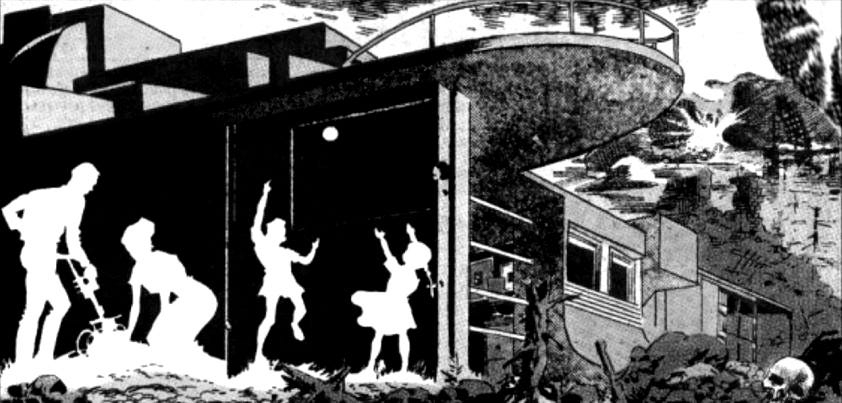
81 years later, on the 4th of August 2026, shy of a few days from the nuclear devastation wreaked on Hiroshima and Nagasaki, the story of There Will Come Soft Rains begins in the city of Allendale, California.
Written in 1950, Ray Bradbury imagines a singular house still standing after nuclear extermination of the town’s inhabitants. The house, which is entirely run by robots and artificial intelligence, is eerily anthropomorphic, so much like the natural world, with robot mice cleaning up dust and voices from the panel that runs the household, reminding its inhabitants to wake up on time and get to work. And yet, except for these voices, there is no other sound. Everyone is gone. The house functions on, seemingly unaware of its lack of human inhabitants, perhaps despite its awareness.
The story is haunting because it introduces the tragedy of what has happened gradually.
“The entire west face of the house was black, save for five places. Here the silhouette in paint of a man mowing a lawn. Here, as in a photograph, a woman bent to pick flowers. Still farther over, their images burned on wood in one titanic instant, a small boy, hands flung into the air; higher up, the image of a thrown ball, and opposite him a girl, hands raised to catch a ball which never came down.”
We learn of the family’s last moments through the paint that was not bleached black by the radiation, light and heat — reminiscent of the Hiroshima shadows. Their death is so sudden, so unplanned and unforeseen. When they were alive, their household worked by the minute on the clock, and yet their deaths came so unexpectedly — perhaps on a nice sunny day — their essence now marked on the wall of a house that, by the end of the story, burns up and collapses. Their lives were “burned on the wood in one titanic instant”, one instant so large and incomprehensively atrocious that they did not have time to realise what was happening.
And yet, this story is more tragic and haunting than horrifying, because the real horror of the event has passed. We, as readers, are left to see the aftermath of a world where humans are gone, a world in which we have killed ourselves.
The tragedy of this devastation is quieter, more haunting — as we see the last remains of this family die off and go up in flames, first the family dog that is treated, who dies of radiation sickness (treated as a nuisance by the robotic house as it suffers), and then the entire house, desperately trying to save itself from the fire.
This short story reminds me of the T. S. Eliot poem, “Hollow Men”, in which he famously writes: This is how the world ends, This is how the world ends, This is how the world ends, Not with a bang but with a whimper.
Sixteen hours ago, an American plane dropped one bomb on Hiroshima and destroyed its usefulness to the enemy. The bomb had more power than 20,000 tons of TNT…
It is the atomic bomb. It is a harnessing of the basic power of the universe. The force from which the sun draws its power has been loosed against those who have brought war to the Far East.
— US President Harry Truman’s announcement of the Hiroshima bomb.
Content warning: this section contains possibly disturbing details of death and sickness, and horrors of the bomb’s aftermath.
There was a bright flash — so hot and so powerful it felt like the sun had descended on Earth. A nurse, Eiichi Uchida, 20 years old at the time, wrote: “Amid wordless screams and cries, I looked outside the hospital. An orange sun surged toward me with a great roar.”
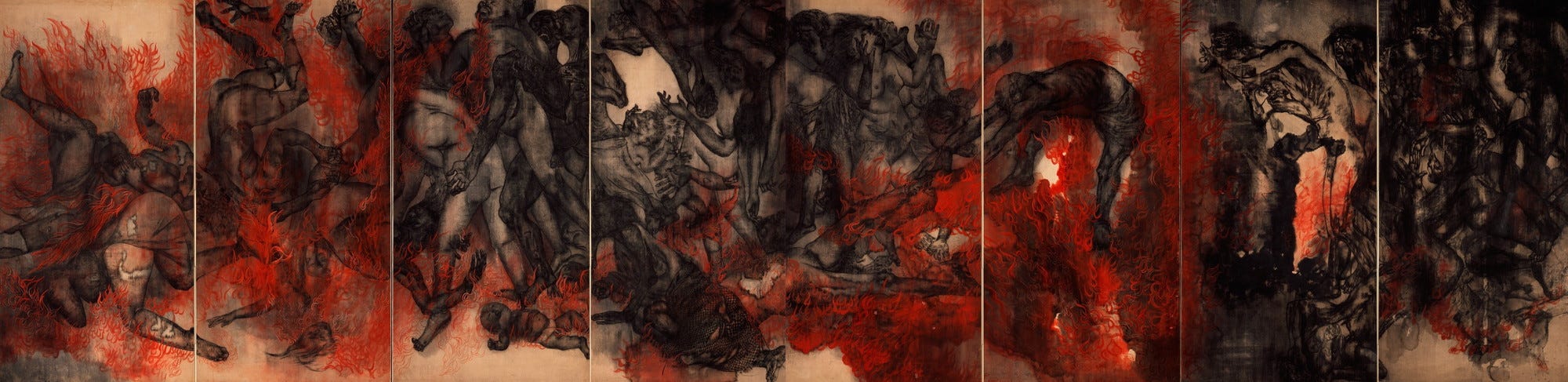
“Everything became white, and there was no colour at all. And then was a strong blast. I felt like I was in a tornado or a typhoon,” Keiko Ogura, a Hiroshima survivor, recounted, “And then unconsciousness. Everyone was unconscious. When I opened my eyes, everywhere was just broken.”
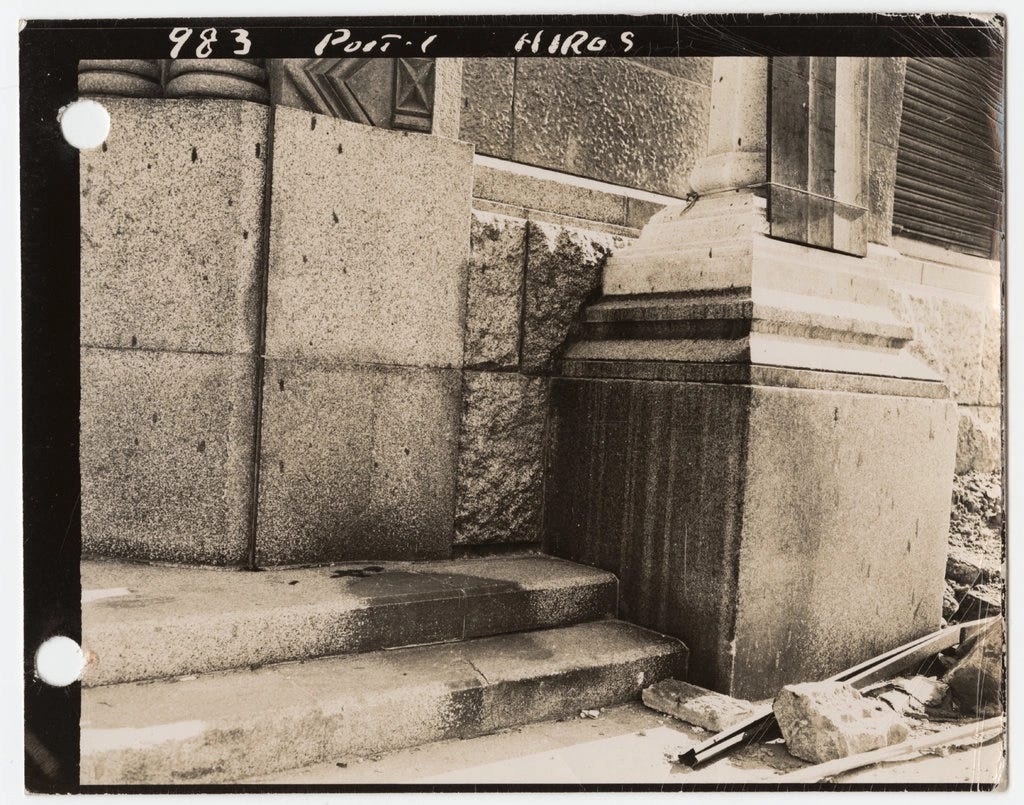
Survivor recollections of the aftermath of the nuclear bomb in Hiroshima and Nagasaki are spine-chilling. Many thought that they had died and had woken up in Hell. The shadows of people in their last moments were permanently preserved on stones, concrete, pavements and building steps — created as they blocked the intense heat, light and radiation that bleached their surroundings. Ferocious heat rays were unleashed throughout the city. Those exposed to it were severely burned, and many died, some instantaneously, and others slowly.
Almost 60% of the buildings in Hiroshima were completely wiped out. People were trapped under the rubble, desperately trying to break free, clutching their children close to them as they struggled to escape; those outside and exposed were severely burned, their skin peeling off their bodies and hanging loose around their arms. The pattern of their clothes and kimonos had been etched on their skin. Everywhere, people could be heard begging for water. Massive firestorms ravaged the city.
The few standing hospitals, and any doctor or nurse alive and relatively uninjured, were tasked with dealing with thousands of patients coming to them in hordes. People were vomiting for reasons they couldn’t understand. Those with no apparent wounds or burns began to die.
Around 20-30 minutes after the explosion, it started to rain. People, quenched for thirst, started opening their mouths, trying to gulp down the water from above. But this wasn’t normal rain. It was black and heavy like tar, staining their skin, sticking to their clothes, leaving permanent streaks on walls and plaster. It was highly radioactive — made up of carbon soot flung into the air by the fires, unfissioned uranium isotopes and condensed water. People threw themselves into the river because their skin burned. The rivers became so full of corpses that there was no space in between.
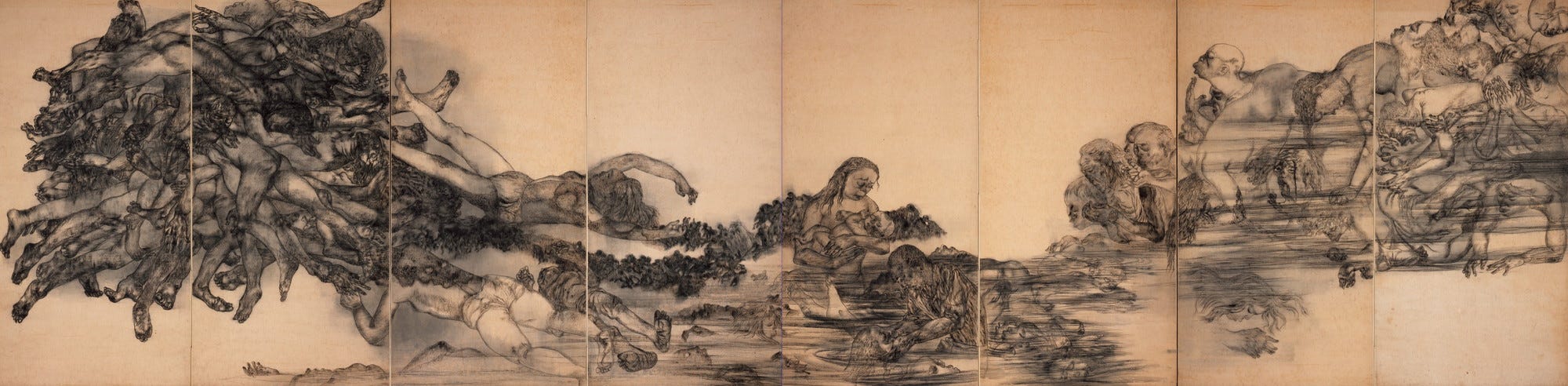
“Large raindrops pelted down and drenched us. We were soaked. We didn’t know at the time, but it was rain contaminated with radioactive material… Then when evening came, we looked back at the city from the mountains. It was burning so ferociously that it could almost scorch the night sky,” Teruko Yahata recalled, who was eight at the time, “And I think about how so many people were burned alive in those flames, and it tears me apart… The smoke was filled with the smell of burning bodies.” Even after so many years, when it gets too hot that you can feel the heat on your skin, she remembers that smell. 2
And this happened again in Nagasaki, with the same rain falling from the sky, the same indiscriminate death and destruction. More than 30% of the population had been wiped out. Those exposed to the heat rays of the bomb died immediately. “In a grim sense, they were the lucky ones: The bomb’s initial shock wave ended their lives ended almost immediately, sparing them the prolonged agony so many others would endure.” 3
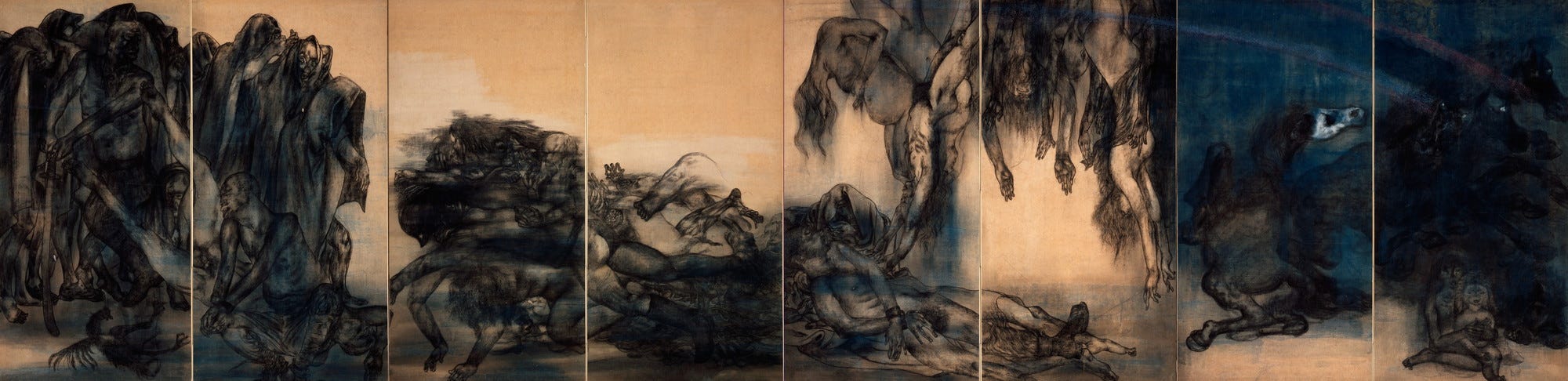
Those who didn’t die immediately began to die slowly. Radiation exposure led to a host of cancerous sicknesses. Around two weeks later, women woke up and found half of their hair falling out onto their hands. Children went bald. Leukaemia ravaged bodies that were seemingly unscathed. Food was gone. Almost everyone was severely malnourished. Fish in the rivers were dead due to the toxic black rain; many began to float up to the surface of the water— about 490 tons of fish had to be thrown back into the river because they were radioactive. Doctors and aid began coming in from across the country, tentatively due to fear of the cities being radioactive — and yet still, there were so many people and not enough resources. Impromptu shrines were put up in which the dead were respectfully and systematically buried from the hospital. So many people had died that even years later, bones were unearthed.
President Truman ordered the bomb to be “released when ready”, handwritten in looping, hasty letters on the back of an official telegram from his Secretary of War.
The bomb may have taken seconds to detonate, a mere handwritten note, but the ensuing havoc, devastation and human suffering that was unleashed went on for years to come. The two cities and their people, with a sizeable chunk wiped out, would struggle to get back on their hands, knees, and legs again.
Their destruction was decisively swifter.
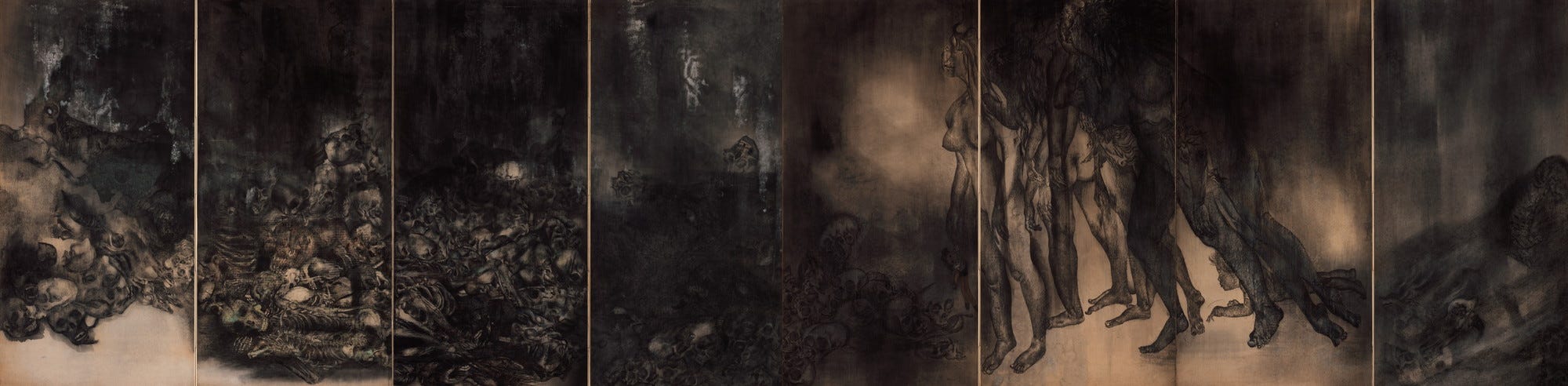
Like that rebellious Greek god Prometheus—who stole fire from Zeus and bestowed it upon humankind- Oppenheimer gave us atomic fire. But then, when he tried to control it, when he sought to make us aware of its terrible dangers, the powers-that-be, like Zeus, rose up in anger to punish him.
— “American Prometheus” (2005) by Kai Bird
Whether the bomb should or should not have been dropped has been widely contested. The Japanese seemed unwilling to surrender, with their soldiers fighting to their very deaths.4 It seemed that if the Americans pressed on to the main islands, there would be even more deaths. As Secretary of War Henry Stimson says in the Oppenheimer film, “the use of the atomic bomb on Japanese cities will save lives.”
The Japanese emperor, Emperor Hirohito, seemed unwilling to surrender. His counsel and military leaders were in a deadlock on whether they should or should not have. It was in this deadlock that Truman decided to release the bombs.
And yet it seems that without them, the war could have ended. In a letter from Truman’s Secretary of War, on 2nd July 1945, outlined the many reasons why the US were in a favourable position, and that “Japan is susceptible to reason in such a crisis to a much greater extent than is indicated by our current press and other current comment.” He comments that Japan is “not a nation composed of wholly mad fanatics of an entirely different mentality from our” but possesses “extremely intelligent people”.
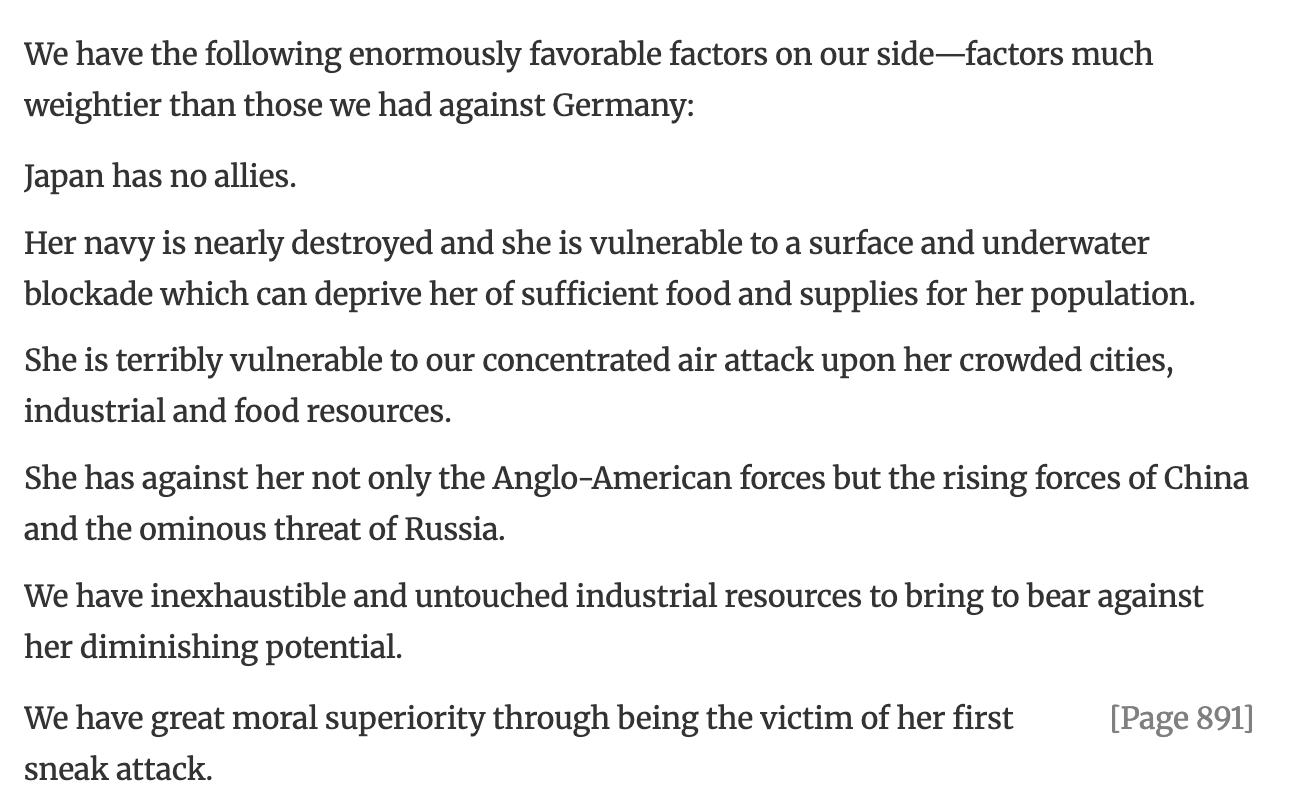
And with the Soviet invading from the north, it seems the world could have gone without the release of the atomic bomb…
In his radio address on 9th August, 1945, President Harry S. Truman claimed that “the world will note that the first atomic bomb was dropped on Hiroshima, a military base. That was because we wished in this first attack to avoid, insofar as possible, the killing of civilians.” Nagasaki was a vital industrial and shipbuilding centre.
Truman’s claims were wrong on multiple levels. Both Hiroshima and Nagasaki were not military centres but primarily cities — and, as with any city during wartime, their productive capacities were turned towards the war effort. It was hardly a “military base” as painted out to seem.
Secondly, these targets were not chosen to minimise civilian casualties — they were specifically selected to show the power of the bomb, create the most damage, and shock Tokyo to resignation. “[B]oth the Target Committee (which included Robert Oppenheimer and Maj. Gen. Leslie Groves of the Manhattan Project) and the higher-level Interim Committee (led by Secretary of War Henry Stimson) sought to kill large numbers of Japanese civilians in the attack.”5 The bomb on Hiroshima was detonated over the commercial and residential centre of the city to make a point to Japanese leadership at the time. They wanted the most dramatic before-and-after image they could get, and with their targets, it was made possible.
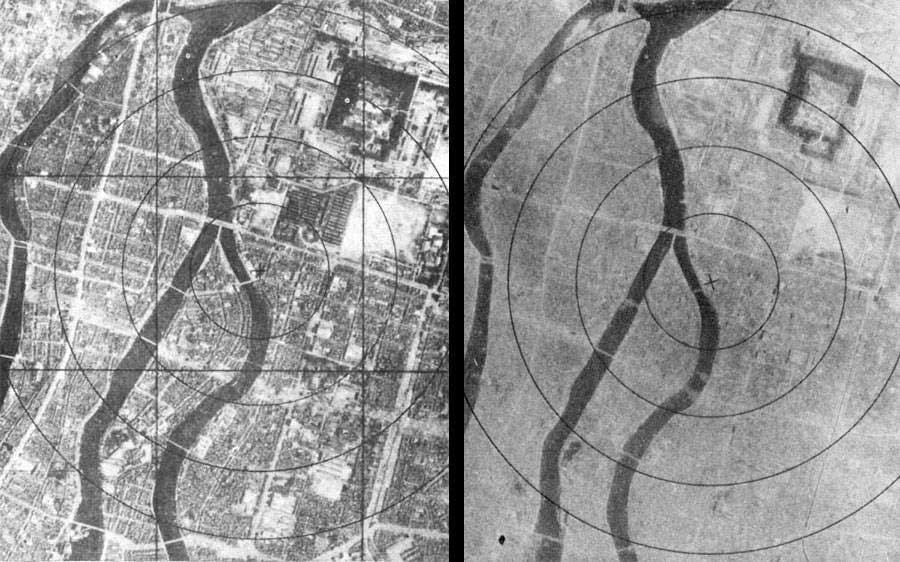
In Nolan’s Oppenheimer (2023), General Groves (played by Matt Damon) says: “We intend to demonstrate it in the most unambiguous terms. Twice. One to show the weapon’s power, and a second to show that we can keep doing this until they surrender.”
There was also a third bomb that was being prepared after August 9th — General Groves sent a memo to the chief of staff saying that “the bomb should be ready for delivery on the first suitable weather after 17 or 18 August”. It was only then that Truman ordered that no further bombs would be dropped without the expressed (and unvetoable) authority of the US president.
Now, we live in a world and a political landscape that has been defined by the atomic bomb. We are living in a constant nuclear-powered prisoners’ dilemma6, in which divided countries that distrust each other all have nuclear weapons that are increasingly more powerful, pointed at each other at all times, ready to be launched at the press of a button.
In the Nolan film, Oppenheimer says, “They won’t fear it until they understand it. And they won’t understand it until they’ve used it.” The nuclear bomb would lead to “a peace based on international cooperation that Roosevelt always envisaged” (around the 1:36:00 mark). In a conversation with Niels Bohr, he is asked if the bomb is “big enough… to end all war” (~ 1:25:00).
And yet the “peace” in which we find ourselves, over 80 years later, really is a fraught game of nuclear deterrence, one made up of ambiguous and shifting red lines, played by the most powerful people in the world, some of whom are very questionably deserving of such immense power. Everyone is scared of treading too firmly on someone else’s toe, and while it may theoretically be a good thing, it means that power is in the hands of those who wield these weapons, how many they have, and how powerful they are. And therefore, everyone wants to have them, because to have a seat at the table, to have a hand of cards to play, you need to be able to own and control those cards at your will. Modern nuclear weapons really do make Hiroshima’s “Little Boy” look like one.
We have been extremely close to nuclear annihilation in the past — in fact, we may all thank our existence today to a single man, Vasili Arkhipov, during the Cuban Missile Crisis, credited for preventing a global nuclear war.7
In a world that is becoming more globally fractured and divided, and collaboration between nations more fraught and filled with suspicion, it really is a matter of time before we end up killing ourselves. It may take years, maybe decades, maybe it won’t even happen in our lifetimes. But we, as a species, have created and unleashed the forces that will annihilate us, whether it be AI, nuclear weapons, climate change, bioweapons, man-made viruses — the list really goes on. We are the snake that is going to bite its own tail off.
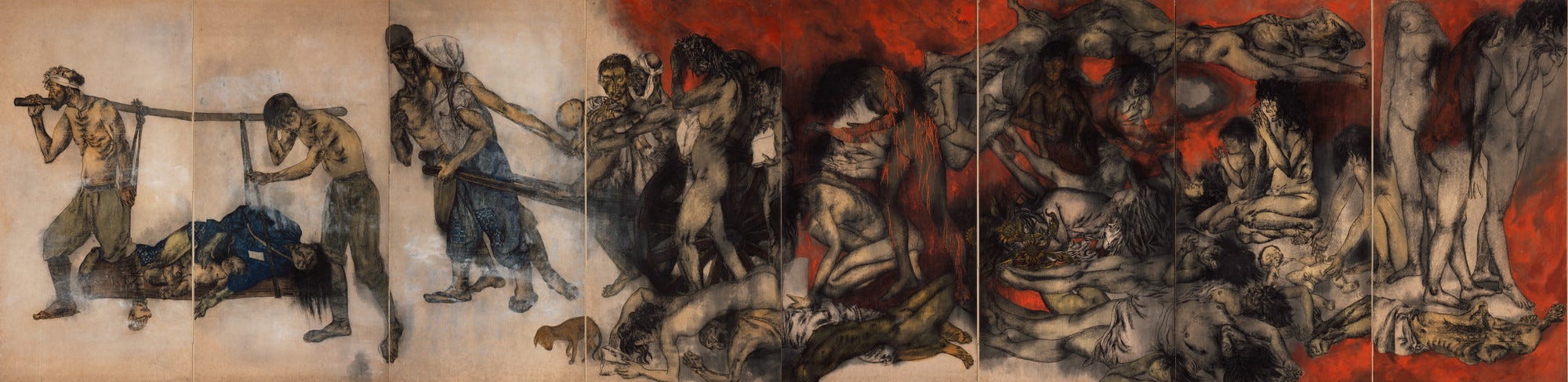
Only a few hours after the dropping of the bomb, as people began to understand what had happened to them, unable to comprehend the horror around them, people began to show extraordinary courage and resourcefulness. Those who were relatively unscathed started to rescue the wounded and make areas of refuge. Doctors who were not too badly injured used all the resources that remained and began tirelessly tending to patients. In Hiroshima, banks opened up again in a few days, makeshift from the rubble. The day that Nagasaki was bombed, limited streetcars began to function again. A train to get resources from outside was set up. Patients were transported to other hospitals. Scientists and doctors began to measure and examine what had happened. The government sent workers to clear up the rubble. The dead were respectfully and systematically buried, and shrines were put up.
Even after hell has descended on Earth, even when it seems like the sun fell from the sky and burned its mark on land, once the ash settles, despite all the suffering and death, despite their lives being forever changed, people have a way of getting back up on their feet.
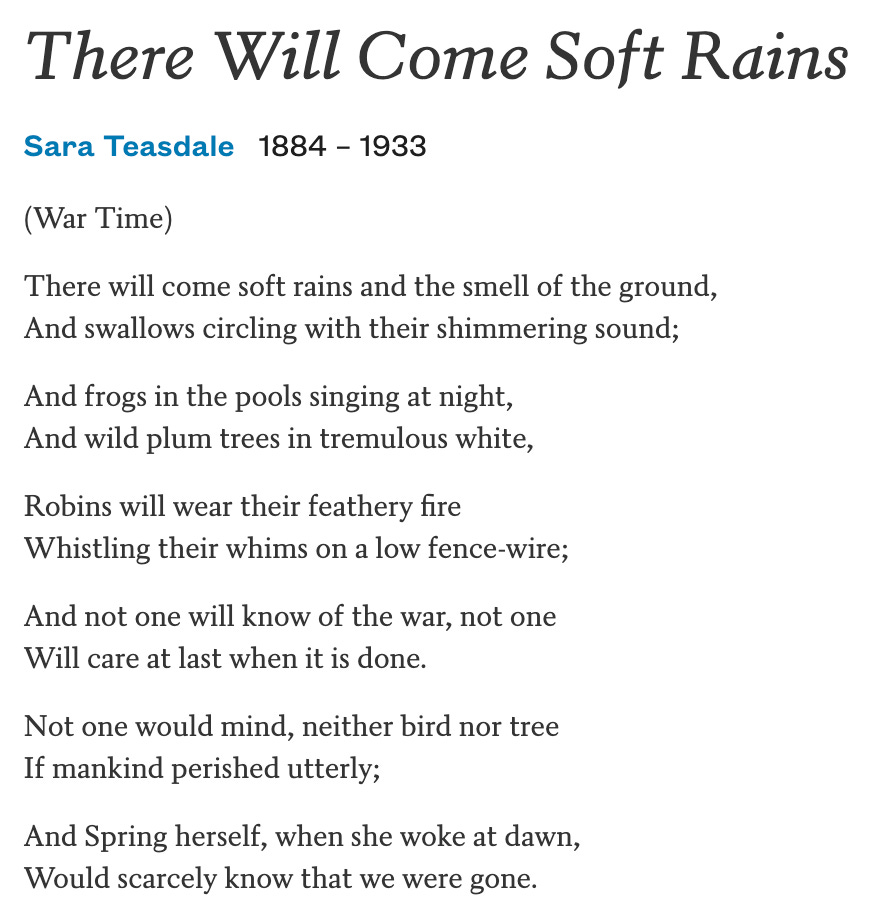
In Ray Bradbury’s short story, There Will Come Soft Rains, my favourite part is the eponymous poem it includes, written by Sara Teasdale during WWI.
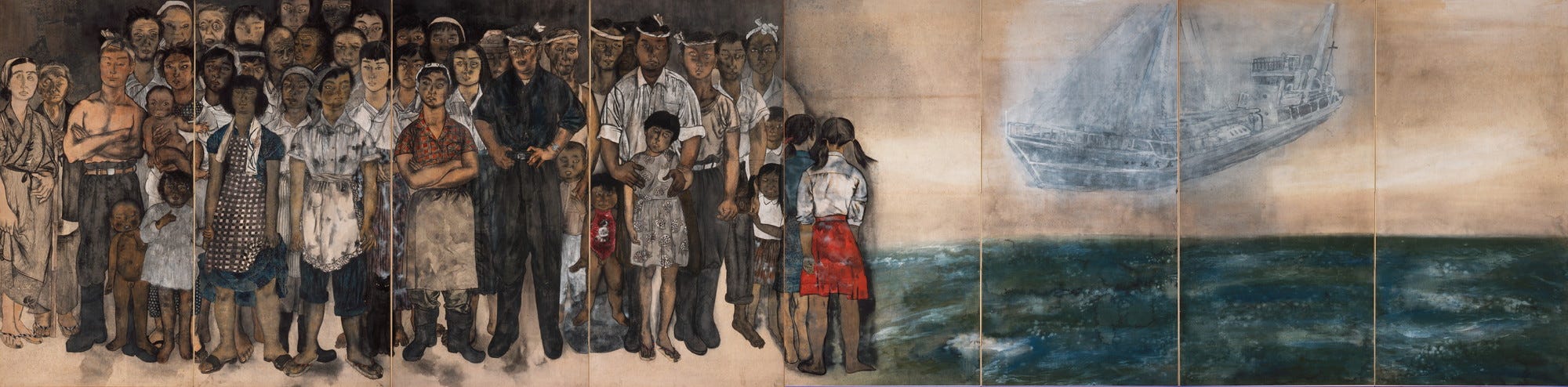
In the days after Hiroshima, about a month later, something strange started to happen all over the city. Scientists were certain that nothing could ever grow again in the city for at least a few decades, and yet sprouting from radioactive, scorched earth were resilient weeds like never seen before.
“Over everything — up through the wreckage of the city, in the gutters, along the riverbanks, tangled among tiles and tin roofing, climbing on charred tree trunks — was a blanket of fresh, vivid, lush, optimistic green; the verdancy rose even from the foundations of ruined houses. Weeds already hid the ashes, and wild flowers were in bloom among the city’s bones. The bomb had not only left the underground organs of plants intact; it had stimulated them. Everywhere were bluets and Spanish bayonets, goosefoot, morning glories and day lilies, the hairy-fruited bean, purslane, and clotbur and sesame and panic grass and feverfew. Especially in a circle at the centre, sickle senna grew in extraordinary regeneration, not only standing among the charred remnants of the same plant but pushing up in new places, among bricks and through cracks in the asphalt. It actually seemed as if a load of sickle-senna seeds had been dropped along with the bomb.”8
Life, in the end, with or without us, has a way of persevering.
dear readers…
This is perhaps amongst the most difficult posts I have ever written, both physically and mentally. I hope you found this post enlightening. The 20th century was a very dark time in history for a lot of the world, and these two bombings were amongst the darkest. What initially began as a piece to commemorate Ray Bradbury’s excellent short story the day it was set became a very different piece from what I imagined it to be. I hope you found it enlightening.
sources:
Hibakusha (atomic bomb survivor) recollections | devastation of Hiroshima and Nagasaki:
Hiroshima (1946) — John Hersey (excellent work of journalism. Around a 100 or so page book. Incredibly enlightening and informative for my work.)
Turning Point: The Bomb and The Cold War (2024) — Ep. 1: The Sun Came Up Tremendously (one of my main sources while writing)
She Was 300 Yards From the Atomic Bomb Centre, and Survived — NYT op-docs, animated, on Akiko Takakura (highly recommend)
The Nuclear Bomb — Children’s Peace Memorial (very informative)
Art by survivors | Photographs:
Hiroshima Panels — Maruki Gallery (incredible work of art, highly recommend this, really shows the horror after the bombing, with short snippets of writing. used many of these panels in this post)
Drawings by Survivors — Atomic Photographers & Artists (includes paintings, drawings and memories of survivors, with description corresponding to each artwork)
Hiroshima and Nagasaki Before & After — History.com
Hiroshima Files — NYT archive
Visual archives of Hiroshima atomic bombing — Hiroshima Peace Memorial Museum Special Exhibition (
Hiroshima (1946) — John Hersey
Survivor recollection from Ep. 1 of Turning Point: The Bomb and The Cold War (2024)
The Battle of Okinawa, an 86-day on-ground battle, was one of the bloodiest for both sides, with 12,000 American soldiers dying (and 50,000 casualties), and about 100,000 Japanese soldiers dead, with over 100,000 Okinawa civilians killed or driven to mass suicide in the crossfire. Well-trained pilots would drive their planes into American ships at 500 miles an hour, causing catastrophic damage — a strategy called “kamikaze warfare”.
McKinney, K. E., Sagan, S. D. and Weiner, A. S. (2020) ‘Why the atomic bombing of Hiroshima would be illegal today’, Bulletin of the Atomic Scientists, 76(4), pp. 157–165. doi: 10.1080/00963402.2020.1778344.
The prisoner’s dilemma is a classical problem in game theory that suggests that if two players, without knowledge of the other’s action, choose an option while acting in their self-interest, they will end up in the worst collective outcome. Had they collaborated, they would both be better off, and yet deflecting means gaining more personal benefit. Therefore, both would choose to deflect.
During the Cuban Missile Crisis, a Soviet Navy submarine tracked a U.S. Navy signal from above and was unsure if war had begun or not. The First in Command and Political Officer were both convinced that it had, and had voted to launch nuclear missiles. Arkhipov, Second in Command, after hesitation, voted no. Without the unanimous vote of the three officers, they could not fire the missile. Had he said yes, it would have surely started a global nuclear war.
Hiroshima (1946) — John Hersey
Life has a way of persevering!!!! Love this quote.